
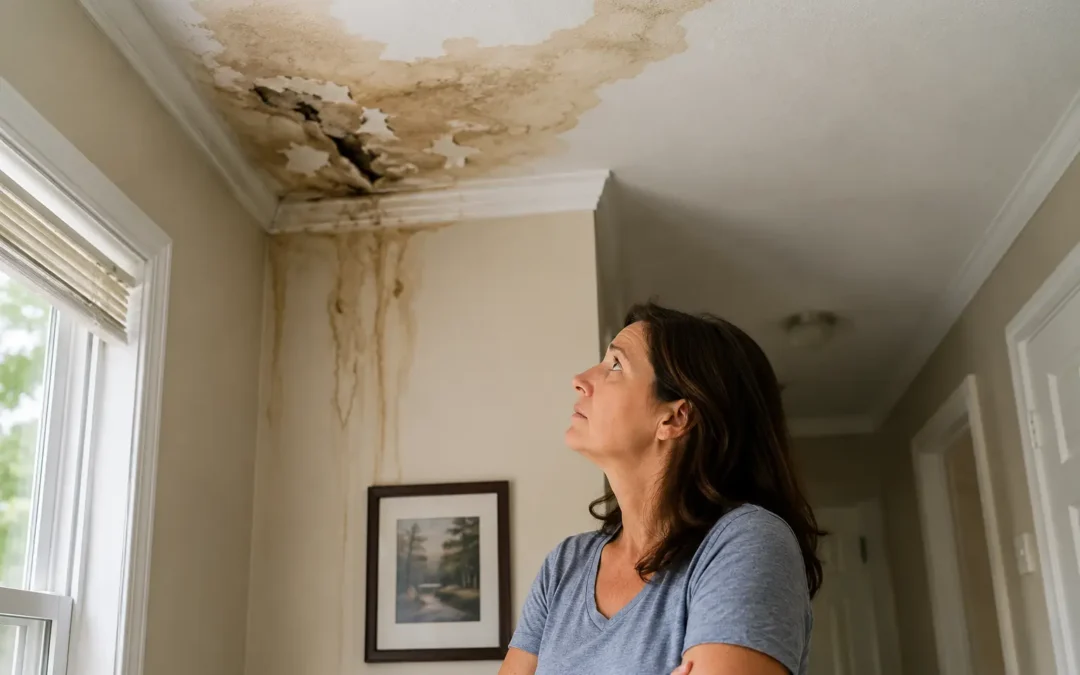
Discovering water damage in your home can put you into instant reaction mode, especially when a water damage insurance claim may be involved. You want to stop the water, clean everything up, call somebody — anybody — and get your house back to normal as quickly as possible.
But some of the most natural reactions homeowners have after discovering water damage can create problems later, especially when an insurance claim is involved.
Before you start tearing things out, throwing damaged materials away, or making permanent repairs, here are 7 things you should think twice about doing — and why.
1. Don’t Start Cleaning Up Before You Document the Damage
One of the biggest mistakes homeowners make is cleaning up too quickly. Before moving wet furniture, pulling up flooring, removing drywall, or throwing damaged belongings away, take photographs and video of the affected areas.
Start with wide shots that show the entire room, then move closer to capture individual areas of damage. Photograph where the water appears to have entered, where it traveled, and anything it affected along the way.
Once damaged material is removed, it may be impossible to recreate what the property looked like immediately after the loss. Document first. Clean up second.
2. Don’t Throw Away Damaged Materials Too Soon
Damaged drywall, flooring, baseboards, cabinets, insulation, and personal belongings can sometimes help show what happened and how far the water traveled. Throwing everything away immediately may remove useful evidence of the extent of the loss.
If something must be removed for safety or to prevent additional damage, photograph and video it thoroughly before disposal. Take pictures showing where the material was located, the damage itself, and — when possible — how it relates to the surrounding area.
You don’t necessarily need to turn your garage into a warehouse of wet drywall and ruined carpet. 😄 The important thing is to create a clear record before damaged materials disappear.
If it has to go, document it before it goes.
3. Don’t Make Permanent Repairs Before the Damage Is Fully Documented
Emergency steps to protect your home are one thing. Permanent repairs are another. Replacing drywall, installing new flooring, repainting stained ceilings, or rebuilding damaged areas too quickly can make it difficult to show what the property looked like after the loss.
Your insurance policy may require you to take reasonable steps to prevent additional damage. That might mean stopping an active leak, extracting standing water, covering an opening, or taking other temporary protective measures. But protecting the property doesn’t necessarily mean immediately restoring everything to its pre-loss condition.
Before permanent repairs begin, make sure the damaged areas have been thoroughly photographed, measured, and documented. Keep receipts and records for emergency work and temporary repairs as well.
Protect the property. Preserve the evidence. Then repair.
4. Don’t Assume the Visible Damage Is All the Damage
Water rarely stays exactly where you first see it. It can travel beneath flooring, behind baseboards, into wall cavities, through insulation, and into adjoining rooms without leaving an obvious trail on the surface.
A ceiling stain or wet section of flooring may only show where the water became visible — not necessarily everywhere it traveled.
That is why documenting the surrounding areas can be just as important as photographing the obvious damage. Moisture meters and thermal imaging can also help identify areas that may deserve a closer look, although these tools should be interpreted carefully and aren’t a substitute for determining the actual source and extent of damage.
Before assuming you’ve found everything, ask yourself:
Where did the water start — and where could it have traveled from there?
5. Don’t Assume the First Inspection Found Everything
An insurance inspection is an important part of the claim process, but an inspector can only document what is discovered during that visit. Some damage may be concealed, difficult to access, or simply not obvious at the time of the inspection.
After the inspection, compare what was examined with what you know about the loss. Were all affected rooms looked at? Were adjoining areas considered? Was flooring checked beyond the visibly wet area? Were walls, cabinets, ceilings, or other materials affected along the water’s path?
If you later discover damage that wasn’t included in the original inspection, document it before making repairs and keep a record of when and how you discovered it. An inspection happened. But was everything actually inspected?
6. Don’t Guess About What Caused the Damage
When you discover water damage, you may not immediately know exactly where the water came from, when the problem began, or what materials have been affected. That’s okay.
Describe what you actually observed. A wet floor, stained ceiling, dripping supply line, damp cabinet, or musty odor is something you can see, hear, or smell. The exact cause and extent of the damage may require further investigation.
Avoid filling in the blanks with assumptions. If you aren’t certain when something started or what caused it, it’s perfectly reasonable to say you don’t know yet.
Good documentation helps establish the facts as they become known. What do you know for certain — and what are you only assuming?
7. Don’t Lose Track of What Happens Next
Once the immediate emergency is under control, it can be easy to assume the hard part is over. But a water damage claim can involve inspections, contractors, drying equipment, estimates, photographs, receipts, emails, phone calls, and other documents that accumulate quickly.
Keep a simple record of what happens and when. Save photographs and videos, receipts for emergency expenses, estimates, reports, and important communications related to the loss.
You don’t need an elaborate filing system. Even a folder on your computer or phone and a basic timeline can help you remember what happened weeks or months later.
If something changes — new staining appears, flooring begins to buckle, an odor develops, or additional damage becomes visible — photograph it and add it to your record. Your claim has a history. Make sure you’re keeping a copy of it.
Water Damage Insurance Claim — Claim Compass Checkpoint 🧭
Before moving forward, take a minute and look at your situation as if you were seeing it for the first time.
Have you documented the damage before things were moved or removed?
Do you know where the water started — and have you considered where it may have traveled?
Have permanent repairs already begun?
Was every potentially affected area examined?
Are you keeping photographs, receipts, estimates, and important communications together?
And perhaps most importantly:
Are you working from what you know — or from what you’re assuming?
You don’t need to have every answer right now. The purpose of this checkpoint is simply to help you identify the questions that may still need answers.
Final Thoughts
Water damage can feel urgent — because sometimes it is. But moving quickly doesn’t have to mean moving blindly.
Protect your home from additional damage, document what you can, keep good records, and avoid making assumptions about things you don’t yet know. The goal isn’t to make the process more complicated. It’s to make sure important information isn’t lost while you’re trying to get your home back to normal.
You may not know the full extent of the damage on day one. You may not know exactly where the water traveled or what will happen next. That’s why good questions, careful documentation, and a little patience can matter.
When something doesn’t add up, don’t be afraid to stop and ask why.
That’s what a compass is for. 🧭